Some things you don't learn. You just grow up knowing them.
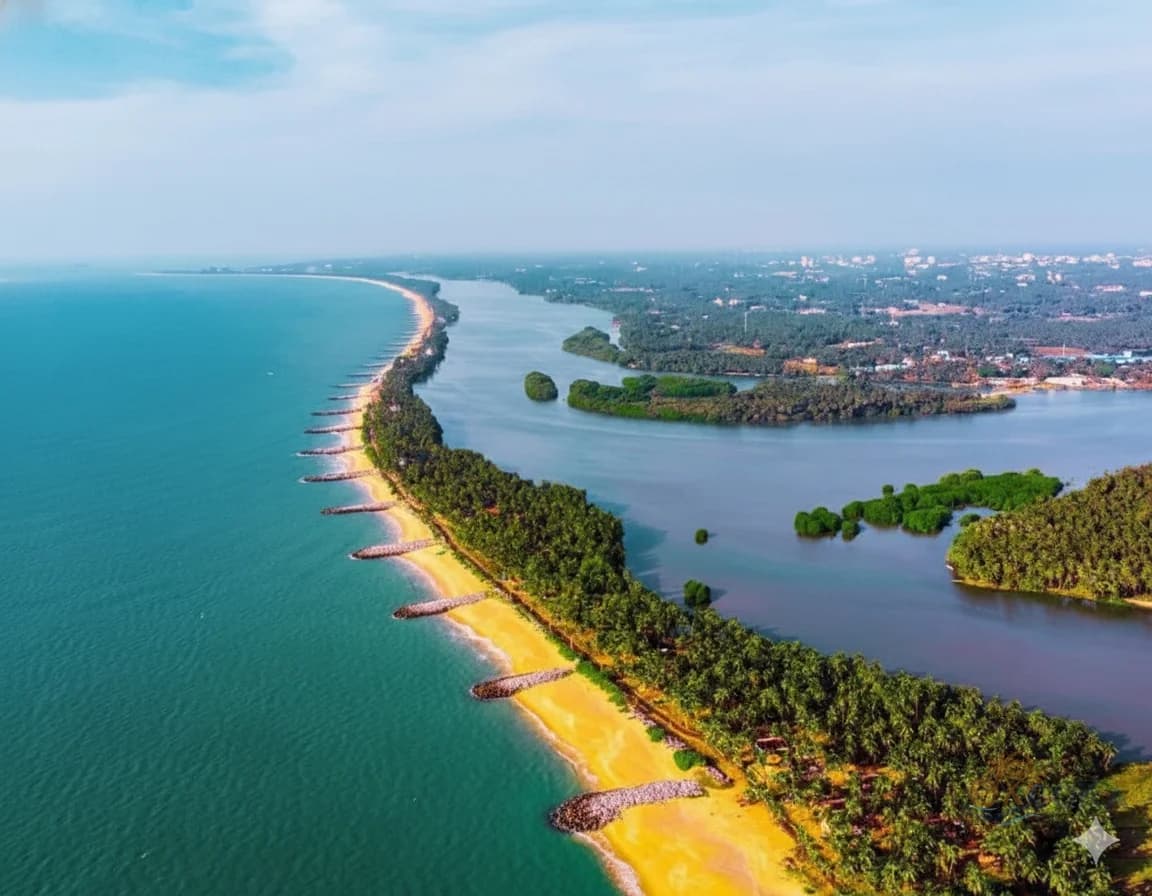
I was born in Udupi.
I grew up on streets that smelled of jasmine in the mornings, and coconut oil and incense by evening. My earliest memories aren't of classrooms or cartoons. They're of drumbeats drifting through the window at night, amma pulling me close during rituals I didn't fully understand, and aaji telling me stories about spirits and serpents as though they were the most natural things in the world.
Because to her, they were.
I didn't realise until I left Udupi for work that the things I grew up with weren't ordinary.
Kids in other cities didn't know what a Bhoota Kola was. They had never stood barefoot on wet mud watching a ritual unfold under the night sky. They had never been told to stay quiet near a Nagabana because, "the serpent is sleeping."
I used to take all of it for granted.
I don't anymore.
So let me tell you about the place I come from- not like a travel guide, but like a boy who misses home.
Bhoota Kola- The Night That Made Me Believe in Something Bigger
I was maybe six or seven when appa first took me to a Bhoota Kola.
I remember gripping his hand very, very tightly.
The torches were already burning when we arrived at the Daivasthana. The deep sound of the chende seemed to come from everywhere. Farmers, teachers, children, grandparents- everyone stood together in the flickering orange light.
Nobody was on their phone.
Nobody was talking loudly.
There was a stillness to the whole gathering, as if the village had collectively decided to hold its breath.
And then the Patri appeared.
I had seen him earlier that evening. He was someone from our village, someone I might have waved to at the market.
But now he seemed completely transformed.
His body was painted in bold colours. His costume was enormous. His movements became more intense as the drums grew louder.
By the time the ritual reached its most powerful moment, I had buried my face in appa's shirt.
He laughed softly.
"Don't be scared. He's here to protect us."
And somehow, I believed him.
That is what I remember most about Bhoota Kola- not simply what I saw, but what it felt like.
People came forward with folded hands. Concerns were shared. Blessings were sought. The ritual became a space where the community gathered, listened, and found reassurance.
Even now, years later, when I hear those drums in the distance on a dark night, something in me straightens up.
Something in me remembers.
Nagaradhane- Why We Never Cut That Tree
Behind my grandmother's house was a small grove.
Dark. Dense. Always a little cooler than the rest of the yard.
At its base sat a serpent stone covered with flowers.
We didn't play there.
We didn't shout there.
And we certainly didn't touch the trees.
That was the Nagabana.
The serpent's home.
Nagaradhane, or serpent worship, wasn't something my family remembered only during a festival. It was part of the rhythm of everyday life.
Aaji would make offerings at the shrine. Special prayers were performed at important times of the year, and if someone in the family was going through a difficult period, someone might quietly suggest a traditional ritual such as Ashlesha Bali.
The rituals could be elaborate, with prayers, music, flowers, and incense.
Or they could be as simple as aaji standing before the serpent stone at dawn, folding her hands and closing her eyes for a moment.
The one I always waited for was Nagamandala.
Artists would arrive in the evening and create intricate serpent designs on the ground using natural colours. Then came the singing, dancing, rituals, and stories that continued deep into the night.
I once asked aaji why we worshipped snakes.
She gave me the look she always gave me when she thought I'd asked a foolish question.
"Because they were here before us," she said. "And they'll be here after. Show some respect."
I've never looked at a cobra quite the same way since.
Kambala- The Loudest, Muddiest Day of the Year
Every boy in Udupi knows the feeling.
You wake up early- earlier than school days, without anyone having to drag you out of bed because it's Kambala day.
You eat quickly. You wear your oldest clothes because you know you'll come home covered in mud.
And then you run.
The paddy field has been transformed.
Water fills the track. The crowd gathers around it. Buffaloes arrive with decorated horns and colourful harnesses, while the jockeys prepare for the races.
And then- They run.
Two buffaloes charging through the water. A jockey balancing behind them. Mud and water flying everywhere.
The crowd erupts.
Children climb onto shoulders for a better view. Old men who have watched countless Kambalas still shout as loudly as everyone else.
As a child, I didn't understand all the history behind the tradition. I only knew that it was one of the most exciting days of the year.
Now, whenever I see Kambala being discussed far beyond Tulunadu, I feel a quiet sense of pride.
Yes. That's us.
That's my people.
Yakshagana- The Night We Were Allowed to Stay Awake
There was one occasion growing up when staying awake past midnight was not only allowed- it was expected.
Yakshagana night.
The troupe would arrive as the sun went down. Families gathered on mats, chai vendors got busy, and children slowly fell asleep on their mothers' laps.
Then the characters appeared.
Towering headgear.
Faces painted in vivid colours.
Costumes that seemed too large to belong to ordinary human beings.
For the next several hours, gods, demons, kings, and warriors would come alive through music, dialogue, dance, and drama.
What I loved most was its energy.
The performances followed traditional stories and structures, but the dialogue could be spontaneous, humorous, philosophical, and sharply witty. A scene could have an entire field laughing one moment and sitting silently the next.
My uncle could recite long passages from Yakshagana from memory.
He would sometimes perform them at dinner, complete with the voice and expressions.
We would all groan.
Secretly, we loved it.
I realise now that I grew up surrounded by people who carried entire stories and epics inside them.
That's not a small thing.
Pattanaje- The Day Everything Became Quiet
If you're not from Tulunadu, Pattanaje can be difficult to explain.
It marks an important transition in the traditional cultural calendar, around the end of May. After months filled with festivals and performances, the atmosphere changes.
The noise settles.
The community enters a quieter period.
As a child, I found that silence anticlimactic.
After months of colour, drums, rituals, and celebrations, suddenly- nothing.
But I understand it differently now.
Families gathered. Simple meals were prepared. There were small offerings and moments of gratitude.
Then people simply sat together.
My grandfather would say:
"The land needs rest. So do we."
He wasn't a man of many words.
But that sentence stayed with me.
Aati Kalenja- When the Monsoon Arrived
The month of Aati meant monsoon in Udupi.
Rain.
Soggy school days.
And, somewhere nearby, the arrival of Kalenja.
Masked performers would move through the village in procession, accompanied by drums and traditional rituals. Rain would still be dripping from the leaves, the ground would be wet, and offerings of rice and coconut would be made.
As a child, I loved it because the entire village seemed to come alive.
People stepped out of their homes.
There was music.
There was movement.
There was something almost magical about seeing familiar streets transformed by the ritual.
Only later did I understand the deeper connection to the agricultural life of the region- the hopes for rain, a good harvest, and enough for the community.
Generations before us had gathered for many of the same reasons.
They depended on the rain.
And, in many ways, so did we.
Home Is a Feeling, Not Just a Place
I live far from Udupi now.
My life looks very different from the one I grew up in- faster in some ways, quieter in others.
But certain things still bring me home.
A chende drum in a video.
Heavy July rain.
The smell of incense.
A conversation about Kambala.
Someone mentioning Bhoota Kola.
Every time someone asks where I'm from, I don't simply say Karnataka.
I say:
Udupi. Tulunadu.
And when they don't recognise the name, I think:
Well, that's their loss.
Because these traditions didn't simply happen around me while I was growing up.
They shaped me.
They taught me that community matters. That nature deserves respect. That rest has its place. That stories can carry a culture across generations.
I was just a boy growing up in Udupi.
But Tulunadu made sure I carried it with me.
And perhaps that's what makes a place truly special.
You don't simply remember where you came from.
A part of it comes with you.
Discover Tulunadu Through Its Stories
At Excoka, we believe the best way to discover a place is to look beyond its attractions.
It is the traditions, food, festivals, people, stories, and everyday moments that give a place its soul.
These are the stories we want to help you discover—not simply as a traveller passing through Tulunadu, but as someone willing to slow down, listen, and experience it.
Come discover Tulunadu.
Discover the places. Meet the people. Experience the culture.
Excoka- Discover Tulunadu. Discover the stories behind the places.