I went to Udupi not knowing what to expect. I came back a little changed.
Honestly, I almost skipped Udupi. I had a few days free, a train ticket was cheap, and someone at work had mentioned it once in passing- "oh, the temple town near Mangalore, you should go." That was it. No research, no itinerary. I packed a bag the evening before and left.
Day 1- The town that smells like flowers and incense and the sea, all at once
I got off the train around 10 in the morning. The first thing that hit me was the smell- coconut oil, marigold garlands, and somewhere in the distance, the salt in the air from the coast. I didn't have a plan. I just started walking in the direction everyone else seemed to be walking.
That direction was the Krishna Matha. I'd read a little about it on the train — 13th century, founded by the philosopher Madhvacharya, one of the most important Vaishnava temples in the country. But none of that prepares you for actually being there. The temple is the town. Everything- the roads, the shops, the food stalls, even the timing of people's days- revolves around it.
Inside, you don't see the deity directly. You look through this small window with nine holes — the kanakana kindi- and beyond it, lit by oil lamps, is Lord Krishna. I stood there longer than I expected to. There was something about it, the simplicity of it, the darkness and the small flickering light and the sound of the bells, that made me completely quiet inside. I'm not a particularly religious person, but I get it now. I really get why people come here.
"I stood at that window for a long time. The person next to me was crying softly. The person behind me was whispering a prayer. I was just trying to breathe slowly."
I ate lunch at a small darshini near Car Street. No menu, just a thali- rice, sambar, rasam, three different curries I couldn't name, papad, and a tiny cup of sweet payasam at the end. Everything had coconut in it. Everything was just right. It cost me under a hundred rupees. The man behind the counter asked where I was from and then immediately recommended three other places I should eat before I left.
On my way out, a stall near the temple entrance was frying goli baje- these round, golden dumplings made from maida and curd, crispy outside and almost airy inside. I bought a small paper packet of them. I ate the whole thing standing on the street. Then I went back and bought another.
"Nobody warned me about the goli baje. That feels like a crime."
I walked the streets for the rest of the afternoon with no particular purpose. That's the thing about Udupi- it doesn't demand anything from you. You can just exist in it.
Day 2- The island that looks like it belongs on another planet
I hired an auto early in the morning to take me to Malpe Beach. The driver, a quiet older man, told me to go to St. Mary's Island- "don't skip it, everyone who skips it regrets it." Good advice, as it turned out.
Malpe itself is lovely in an unglamorous way. It's a working harbour. Fishing boats painted in chipped blues and yellows, nets spread out on the sand, fishermen in rubber boots doing things I didn't understand but watched anyway. The beach isn't manicured or cleaned up for tourists- it's just a beach that happens to be there, doing its thing. I liked it for exactly that reason.
The ferry to St. Mary's Island takes about 30 minutes and costs almost nothing. When we got close enough to see the rocks, I genuinely laughed- not because they were funny, but because I wasn't prepared. Hexagonal columns of basalt rising straight out of the water, perfectly geometric, like someone had stacked a million dark grey pillars side by side. They're 60 million years old, formed by volcanic activity when India was still attached to Madagascar. I kept trying to take photos and giving up because no photo was doing it justice.
"Standing on those rocks with the sea crashing around them, I thought: I could have very easily never seen this. I almost didn't come. That would have been a real shame."
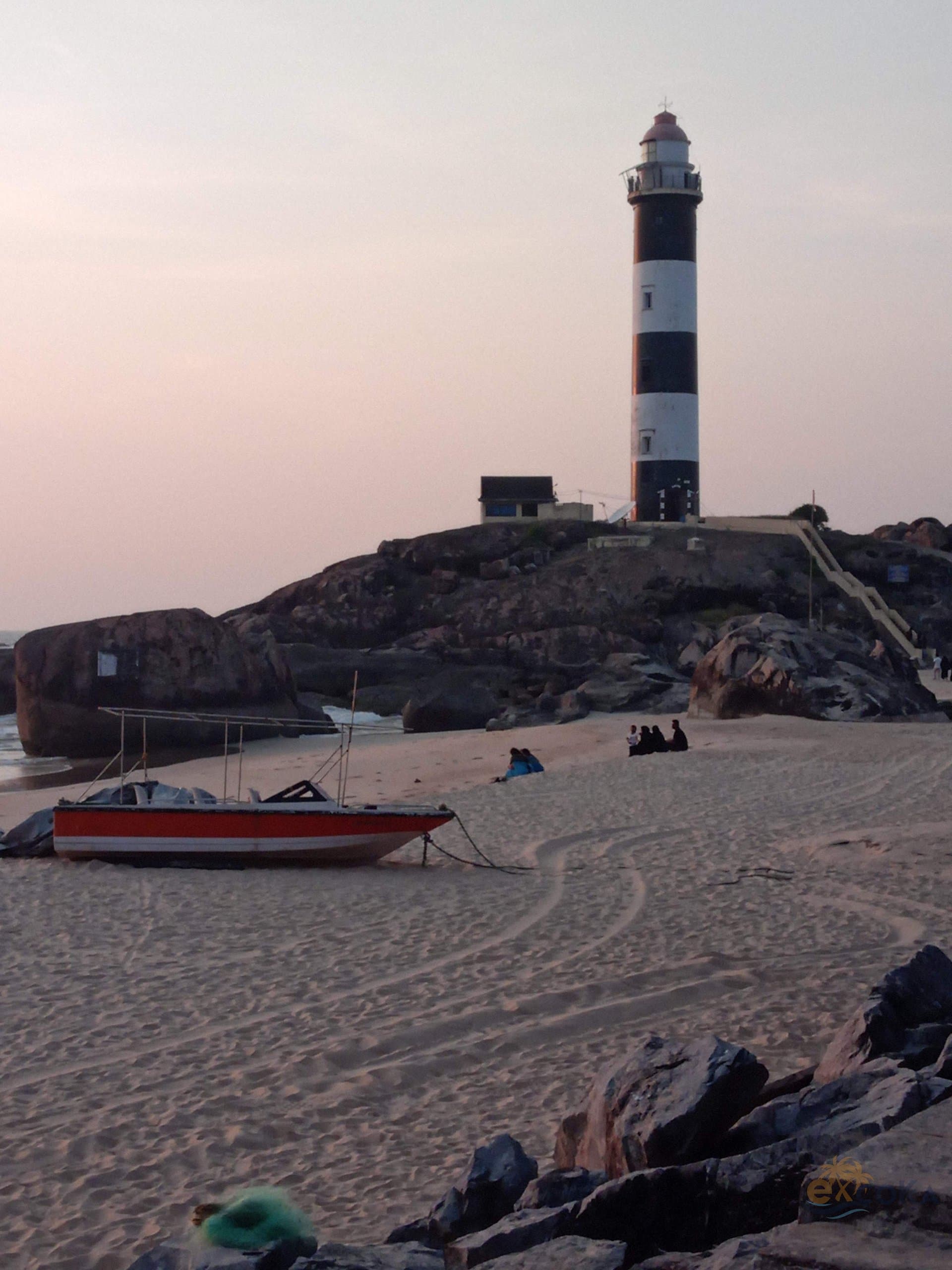
The afternoon I spent at Kaup Beach, further north. There's a lighthouse there- old, colonial, not particularly tall- but you can climb to the top and look out at the coastline stretching in both directions. I sat on the steps near the base until the sun was low and the light went orange and the sea went dark. The kind of hour you don't really want to end.
I had dinner at Hotel Woodlands. Someone had written the name in my notebook before I left- I don't even remember who. I ordered the ghee dosa, and it arrived with three chutneys and a small bowl of sambar. Perfectly crisp at the edges, soft in the middle, the kind of dosa that ruins you for lesser dosas. Simple, unhurried, exactly right.
Day 3- A slow morning, a long goodbye, and one last plate of goli baje
I set an alarm for 5:30 to make the early morning puja at the Krishna Matha. I almost turned it off. I didn't, and I'm glad.
The temple at 6 AM is a different place than the temple at noon. The crowd is smaller and quieter. The lamps are lit. The priests move through the rituals in the kind of practiced, unhurried way that takes decades to develop. No photographs are allowed inside, which felt right. Some things don't need to be documented. You just have to be there.
I spent the morning wandering to some of the smaller temples nearby- the Anantheshwara temple is beautiful and half-empty compared to the Matha, which means you can actually stand still and look at things. The carvings on the gopura are extraordinary up close. I noticed I kept stopping and looking up and feeling this dull amazement, the kind that doesn't make you want to say anything.
In the afternoon, I walked over to Manipal- the university town about 5 km away. It has a completely different energy: younger, louder, full of bookshops and tea stalls and students on motorbikes. I found a place serving fresh goli baje near one of the main roads. Sat down, ordered a plate, ate slowly, watched people go by. A good way to spend an hour in an unfamiliar town.
My train was in the evening. I got to the station early and sat on the platform bench watching the sky go from blue to purple. I had that specific feeling of not wanting to leave a place, which doesn't happen that often. Udupi had been so easy to be in. No hustle, no performance. Just old streets and good food and a few moments of genuine stillness.
"Three days in Udupi. I think about it more than I expected to."
A few things worth knowing before you go
Go October to February- the coast is calmer and the weather doesn't fight you.
The ferry to St. Mary's Island stops running if the sea is rough. Go on day two, not day three.
Eat goli baje from the stalls near the temple- freshly fried, paper packet, standing on the street. That's the way.
For the early puja, arrive before 6 AM. Dress simply. Leave your phone on silent, ideally in your bag.
The auto drivers near the temple are honest and know everything. Just ask.
Written somewhere between Udupi and home,
still thinking about the goli baje.