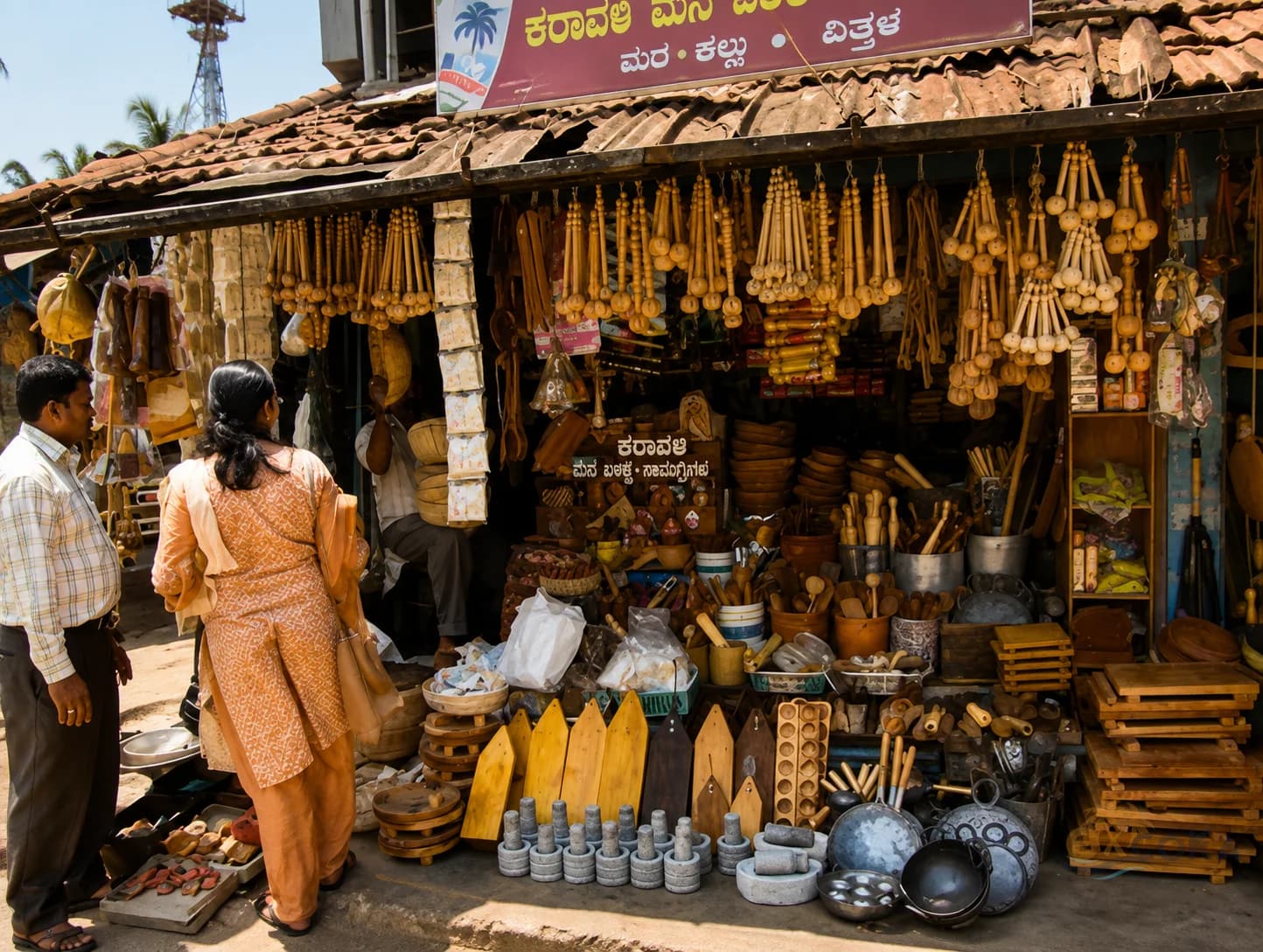
Three Udupi products carry a Geographical Indication tag from the Government of India, which makes this the only shopping list for the town backed by a registry rather than a review site.
Udupi Sarees, handloom cotton woven in the district
Udupi Mattu Gulla, the round green brinjal grown at Mattu village
Udupi Malligae, the local jasmine, sold by strung length rather than by weight
Everything else is optional. These three are specific to here.
Udupi Mattu Gulla
The one thing you genuinely cannot buy properly anywhere else.
A round green brinjal grown around Mattu village, roughly 10 km south of Udupi, in the belt between the Udyavara and Swarna rivers. The soil and the brackish water in that pocket are the reason it cannot be replicated elsewhere, which is exactly what a GI tag exists to protect.
The specifics:
GI tag received in 2011
Grown in the area for around four centuries
Local tradition ties its origin to Vadiraja Tirtha of Sode Vadiraja Matha
Distinctly less bitter and firmer than ordinary brinjal
Where to get it: Mattu village itself, or the weekly sante markets across the district. Vegetable shops in Udupi town stock it when it is in season, broadly the dry months.
What to do with it: gulla sambar is the standard preparation. Ask at a homestay and someone will usually cook it for you, which is better than carrying it home.
Travel note: it holds for a few days. Fine for a domestic trip, not for an international one.
Udupi Sarees
Handloom cotton, woven in the district, GI tagged.
The Udupi saree tradition nearly disappeared. Handloom weaving here declined heavily through the late 20th century, and the surviving production runs through cooperative societies and revival efforts rather than a large commercial industry.
What they are like: cotton, checked or striped, light, and made for this climate. Not ornate. If you want heavy silk, this is not it, and Karnataka has other places for that.
Where to buy: Kadike Trust and the weaver cooperatives in the district are the direct source. Buying from a cooperative rather than a general saree shop is the difference between supporting the craft and buying something with the name on it.
Of the three GI products, this is the only one that survives a suitcase.
Udupi Malligae
The local jasmine, and the one that will disappoint you if you treat it as a souvenir.
It is sold by strung length, measured in arms or mudi, rather than by weight. That pricing convention is itself local. The flower is smaller and more intensely scented than commercial jasmine varieties.
Where: Any morning flower market in Udupi town. Shankarapura, about 20 km away, is the growing centre and the variety is sometimes called Shankarapura Malligae.
The honest advice: buy it on the morning you leave, and wear it or keep it in the car. It is a flower, not a souvenir, and it will not survive a long trip home. What it will do is make one day smell like coastal Karnataka, which is the actual point.
The sante markets
Weekly markets, called sante, run on fixed days across the district. They are where local shopping actually happens.
Brahmavar, weekly, north of Udupi
Kota, weekly
Kundapura, weekly, the largest in the north of the district
Santekatte, where the name literally means market place
What is worth buying at them: coastal spice mixes, dried fish for the households that want it, seasonal produce including gulla, and jaggery. Prices are local prices. Bargaining is normal but not aggressive.
Check the day locally. Sante days are fixed but not published in any reliable central place.
Also worth carrying home
Banana chips and happala, fried in coconut oil. The coconut oil is the difference. Chips fried in refined oil taste like chips from anywhere.
Coconut oil itself, cold pressed, from a local mill rather than a supermarket.
Yakshagana masks and props. These exist as souvenirs and they exist as working craft. The genuine ones come from craftsmen who supply working troupes, not from stalls near the temple. If you are here during the touring season, roughly November to May, ask at a performance rather than in a shop.
Filter coffee powder, ground locally.
Cashews. The coastal belt from Udupi to Kundapura grows and processes them.
What to skip
Mass-produced brass deity figurines and machine-printed textiles sold near the temple. They are not made here, they are the same items sold at every temple town in South India, and they crowd out the things that actually are local.
Frequently asked questions
What is famous to buy in Udupi? Three GI-tagged products: Udupi handloom sarees, Mattu Gulla brinjal and Udupi Malligae jasmine. Beyond those, banana chips fried in coconut oil, coastal spice mixes and cashews.
What is special in Udupi to buy? Mattu Gulla. It is grown only in a small belt near Mattu village and carries a GI tag, so it is the one item genuinely unavailable elsewhere.
Where can I buy Udupi sarees? Through weaver cooperatives and trusts in the district rather than general retail. Buying direct supports a craft that nearly disappeared.
What is Udupi Malligae? The local jasmine, GI tagged, sold by strung length rather than weight. Shankarapura, about 20 km from Udupi, is the growing centre.
Are there markets in Udupi? Yes, weekly sante markets in Brahmavar, Kota, Kundapura and Santekatte. Days are fixed locally. Ask where you are staying.
Is Mattu Gulla available all year? No, broadly in the dry months. Availability drops sharply in monsoon.
Sources and references
Internal links to add: Udupi food guide, what is Udupi famous for, where to stay in Udupi.